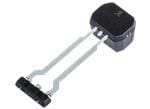
ALT80802KEJJTR

Allegro MicroSystems
250-ALT80802KEJJTR
ALT80802KEJJTR

제조업체:

설명:
LED 조명 드라이버 IC ASYNCHRONOUS BUCK OR BUCK-BOOST LED DRIVER

ECAD 모델:
무료 라이브러리 로더를 다운로드하여 이 파일을 ECAD 도구용으로 변환하십시오. ECAD 모델에 대해 자세히 알아보기

재고 상태: 6,704

재고:
6,704 즉시 배송 가능
공장 리드 타임:
24 주 표시된 것보다 많은 수량에 대한 추정 공장 생산 시간입니다.
최소: 1   배수: 1
단가:
₩-
합계:
₩-
예상 관세:
포장:
전체 릴(1500의 배수로 주문)

가격 (KRW)

수량 단가
합계
컷 테이프/MouseReel™
₩3,051.4 ₩3,051
₩2,248.4 ₩22,484
₩2,058.6 ₩51,465
₩1,839.6 ₩183,960
₩1,737.4 ₩434,350
₩1,664.4 ₩832,200
₩1,406 ₩1,406,000
전체 릴(1500의 배수로 주문)
₩1,404.5 ₩2,106,750
† ₩8,000 MouseReel™ 수수료는 장바구니에 더해져 계산됩니다. 모든 MouseReel™ 주문은 취소 및 환불이 불가능합니다.

제품 속성 속성 값 속성 선택
Allegro MicroSystems
제품 카테고리: LED 조명 드라이버 IC
RoHS:  
1 Output
Boost, Buck
2 A
DFN-10
50 V
3.8 V
360 kHz to 2.2 MHz
20 V
ALT80802
- 40 C
+ 125 C
PWM Dimming
Reel
Cut Tape
MouseReel
브랜드: Allegro MicroSystems
입력 전압: 3.8 V to 50 V
습도에 민감: Yes
장착 스타일: SMD/SMT
채널 수: 1 Channel
제품: LED Drivers
제품 유형: LED Lighting Drivers
팩토리 팩 수량: 1500
하위 범주: Driver ICs
공급 전류 - 최대: 20 uA
제품을 찾음:
유사 제품을 표시하려면 확인란을 하나 이상 선택하십시오.
이 카테고리에 유사 제품을 표시하려면 확인란을 하나 이상 선택하십시오.
속성 선택됨: 0

이 기능을 활성화하려면 자바스크립트가 필요합니다.

CNHTS:
8542399000
CAHTS:
8542390000
USHTS:
8542390090
TARIC:
8542399000
MXHTS:
8542399999
ECCN:
EAR99

LED Drivers for Automotive Lighting

Allegro MicroSystems LED Drivers for Automotive Lighting offers a growing portfolio of LED drivers used for automotive lighting applications. The LED Drivers for Automotive Lighting utilize a unique process technology that provides flexibility and functionality in a small solution footprint. The highly integrated LED driver ICs with on-chip FETs and diverse control options cover many topologies, channel counts, output currents, and feature sets to help users optimize solutions.

ALT80802 Adjustable Frequency Buck 2A LED Driver

Allegro MicroSystems ALT80802 Adjustable Frequency Buck 2A LED Driver is AEC-Q101 qualified and supports buck-boost or buck-mode operation. This high-frequency switching regulator provides constant output current to drive high-power LEDs and integrates a power MOSFET for step-down or inverting buck-boost conversion. The ALT80802 is constructed to aid EMC/EMI design with frequency dithering, soft freewheel diode turn-off, and well-controlled switch node slew rates. A programmable oscillator enables the ALT80802 to switch outside EMI-sensitive frequency bands, such as the AM band. This driver can achieve fast transient response with current-mode control and simple external compensation, and the control loop is designed for PWM dimming operation to achieve low dimming on-time and low turn-on overshoot. When in buck-boost operation, the ALT80802 reduces the current overshoot normally caused by the right half plane zero effect during a PWM dimming turn-off transient. Allegro MicroSystems ALT80802 Adjustable Frequency Buck 2A LED Driver offers a 3.8V to 50V input voltage range, making it suitable for a wide range of lighting applications, including those in an automotive input environment.

자기 속도 센서 IC

Allegro MicroSystems 자기 속도 센서 IC는 방향 센서 IC로 전체 범위의 속도와 속도를 포괄하는 포괄적인 포트폴리오를 제공합니다. 이러한 제품에는 2선식 및 3선식 인터페이스, 자기 인코더(링 자석) 및 기어 톱니 감지, 홀 및 GMR 기술, 변속기, 휠 속도, 엔진, 전기 모터 및 더 많은 인코더 및 기어 톱니 감지 애플리케이션을 위한 ASIL 호환 옵션이 포함됩니다.

LED Drivers

Allegro MicroSystems LED Drivers provide high reliability and robustness in one of the largest selections of wide-input, Grade 0, LED Driver ICs. The devices feature multiple device topologies that cover a wide range of applications.

IS32LT3175N/P Single-Channel Linear LED Drivers

ISSI IS32LT3175N/P Single-Channel Linear LED Drivers come with fade in/out and PWM dimming. The regulators serve as a stand-alone LED driver-configurable from 20mA to 150mA with external resistors, no microcontroller is necessary. A logic level “courtesy light” signal from the PWM pin can be interfaced to precisely drive the LED channel. The IS32LT3175P obtains a positive polarity PWM signal. In addition, the IS32LT3175N obtains a negative polarity PWM signal. The regulator integrates a 63-step fade-in and fades out the algorithm (Gamma correction). This causes the output LED current to increasingly rise up to the full source value after the EN pin is pulsed.